 Warehouse Security
What a warehouse security guard actually does
The best warehouse security guards spend very little time sitting still. On a typical post, a SecureOne officer checks in arriving drivers at the gate, confirms the carrier, the trailer number and the paperwork against the appointment, and directs the truck to the right door. When the trailer leaves, the officer checks the seal number against the bill of lading and logs the departure. Between trucks, the officer walks the dock, looks at trailers staged in the yard, checks that pedestrian doors are closed and confirms that nobody is in an area they should not be.
That routine matters because so much warehouse loss begins at the gate and the dock rather than at the fence. TT Club and BSI found that 22 percent of global cargo theft incidents in their 2025 report involved the cooperation of insiders, and Verisk CargoNet continues to report fictitious pickups and shipment misdirection, where a thief arrives with paperwork that looks legitimate. An officer who checks every driver and every document the same way, every time, is one of the simplest controls a warehouse can add.
Posts we staff at warehouses and distribution centers
Gatehouse and guard shack. The front gate is where most decisions get made. Officers verify drivers and paperwork, log vehicles in and out, issue visitor passes and keep unauthorized vehicles out of the yard. The TAPA Facility Security Requirements, a widely used logistics security standard, call for a written procedure for managing unauthorized vehicles and people in the shipping and receiving yard, delivered to the workforce including guards. We write that procedure into the officer's post orders. Our warehouse access control page explains the gate procedure in more detail.
Dock and shipping office. On the dock, officers watch the handoff between your team and the driver, confirm seal numbers and keep drivers in designated areas. They also report the safety issues they see, such as a blocked exit, a dock plate left unsecured or a trailer without wheel chocks, so your supervisors can fix them before someone is hurt.
Lobby and employee entrance. For buildings with a large hourly or temporary workforce, an officer at the employee entrance checks badges, manages visitors and contractors and, where your policy calls for it, conducts exit checks.
Overnight and weekend posts. When the building is quiet, a single officer can cover a lot of ground with scheduled rounds of the perimeter, the yard and the interior, with every round documented. For sites that do not need a full-time post, scheduled and random patrol visits are often a better fit.
Armed or unarmed warehouse security guards
SecureOne supplies both armed security officers and unarmed officers. Most warehouse posts are unarmed, because the job is mainly about procedures, observation and reporting. Armed officers make sense for some high-value inventory, for sites with a history of armed incidents or when a client's insurer or corporate policy requires it. We will talk through the tradeoffs with you during the site walk and recommend what fits your risk, not what produces the largest invoice.
Training built around your warehouse
Every SecureOne officer is First Aid and CPR certified, and many have military, police or prior security experience. That is the starting point. Before a first shift, each officer learns the site: the gate procedure, the dock layout, where the emergency exits and fire extinguishers are, who to call for each type of problem and what your post orders require. Our in-house Director of Training builds that site-specific instruction for every account, and the broader program is described on our security guard training page.
Site training is also the right place to cover the warehouse safety rules that officers walk past every shift. Warehousing is a demanding environment: the Bureau of Labor Statistics reports a 2023 rate of 4.7 recordable injuries and illnesses per 100 full-time workers in warehousing and storage, compared with 2.4 for private industry as a whole. OSHA's warehousing guidance stresses forklift and pedestrian separation, keeping clear of dock edges and keeping exit routes unobstructed and well lit. Our officers are not your safety department, but with site training they become another set of eyes that can notice and report the hazards OSHA identifies.
Reporting you can see in real time
Officers file shift reports, incident reports, photos and checkpoint scans in Vision InSites, our real-time reporting platform. You can see what happened at the gate last night without waiting for a weekly summary. If something needs attention right away, your single point of contact, available 24/7, calls you directly. WinTeam handles scheduling and billing, so coverage stays consistent and invoices match the hours that were worked.
Local service, national reach
SecureOne has provided contract security since 2002. For companies with buildings in several states, SecureOne provides local, regional and national security officer services under one account, with one point of contact and one reporting platform, supported by a nationwide network of pre-screened providers for multi-state, multi-location operations.
Frequently asked questions
How many warehouse security guards does my facility need?
It depends on the number of gates and active dock doors, your operating hours, the value of what you store and your loss history. Many single-building sites start with one officer at the gate during operating hours and patrol coverage overnight. We recommend a staffing plan after the site walk.
Can your officers handle driver check-in and seal verification?
Yes. Gate check-in, paperwork review, seal number checks and trailer logs can all be written into the officer's post orders, matched to your own procedures and systems.
Do you provide short-term warehouse security?
Yes. We staff long-term posts as well as short-term coverage for peak season, inventory counts, building moves and vacant or idle facilities.
What do your officers wear?
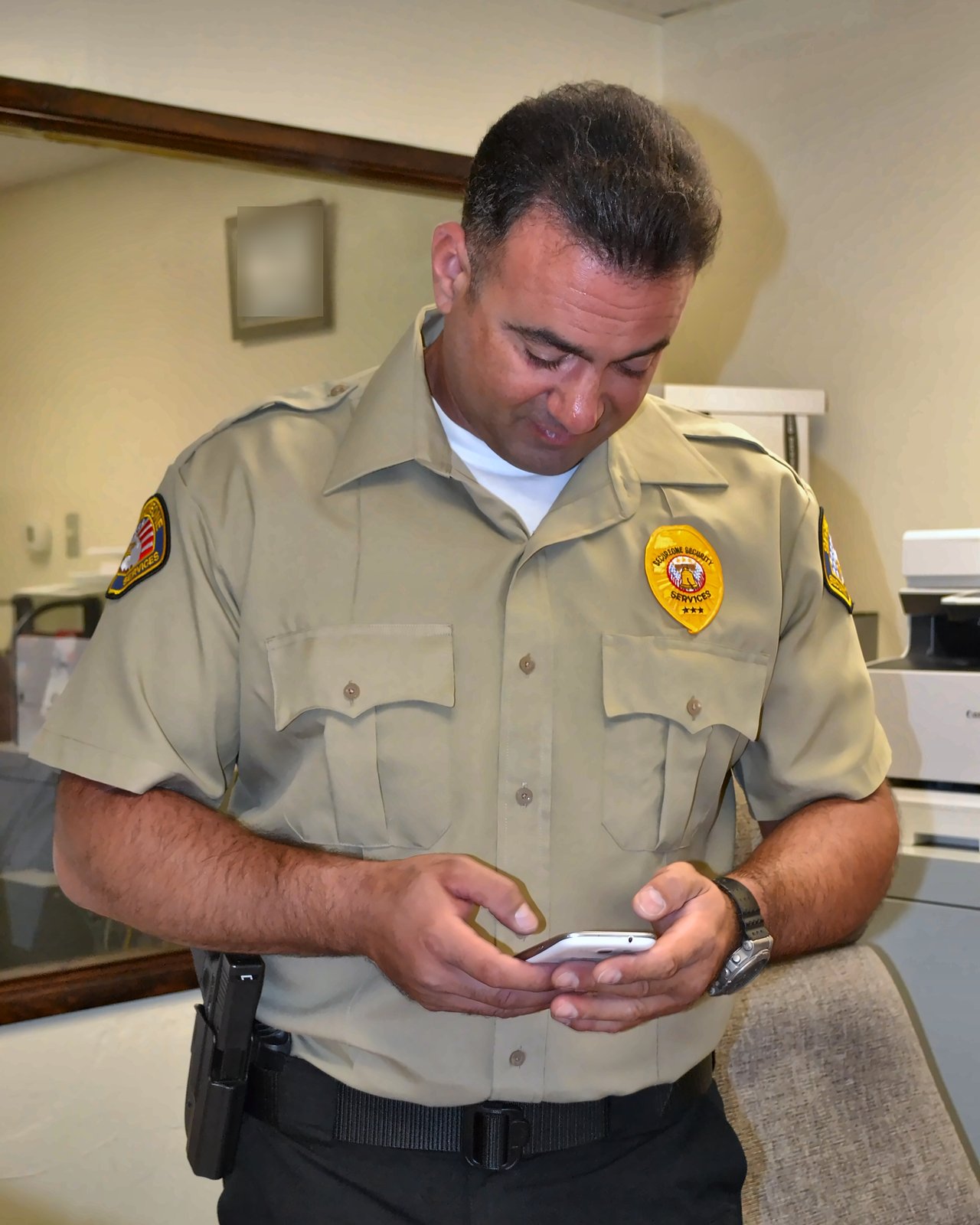
SecureOne's standard uniform is a tan shirt, black hat, black pants and black shoes, so officers are easy to identify on the dock and at the gate.
Related services
Sources: TT Club and BSI, 2025 cargo theft report, Verisk CargoNet, Q2 2026 theft trends, TAPA Facility Security Requirements 2023, U.S. Bureau of Labor Statistics, injury and illness rates 2023, OSHA, Warehousing: Hazards and Solutions.