 Warehouse Security
A Warehouse Security Checklist for Managers
A practical review you can complete in an afternoon, from the fence line to the officer's post orders.
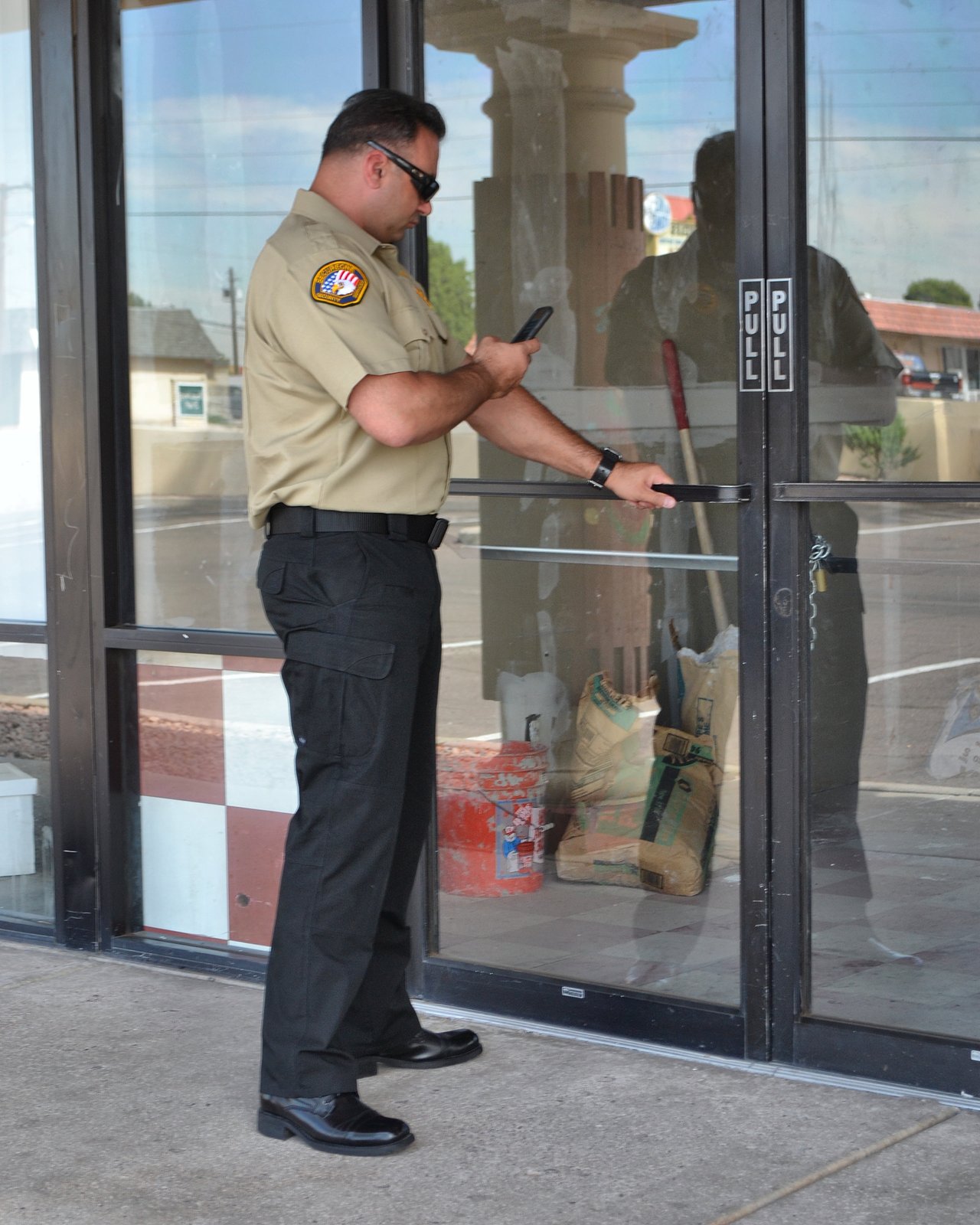
Most warehouse security problems are not mysteries. They are a gate that gets waved through at shift change, a fence panel nobody has looked at in months, a dock door left open with no trailer in it or a key that never came back. A regular walk-through catches those things before they turn into a loss. This checklist is written so a manager can work through it in an afternoon, section by section, and come away with a short list of fixes. Print it, take it with you and make notes as you go.
Perimeter and fence condition
Walk the full fence line, not just the parts you can see from the office. Look for gaps at the bottom, damaged panels, gates that do not latch, and pallets, dumpsters or trailers parked close enough to the fence to climb on. The TAPA Facility Security Requirements, a logistics security standard used by many shippers, call for a physical barrier of at least 6 feet around the shipping and receiving yard and for that barrier to be inspected at least weekly. Even if you are not working to TAPA, a weekly fence check with a written record is a sensible habit.
Gates and guard shack procedures
Stand at the gate during a busy hour and watch what actually happens. Is every driver checked against an appointment or pickup list? Are the carrier name, tractor and trailer numbers recorded? What happens when something does not match? The answer should be written down and should not depend on who happens to be working. If you use officers at the gate, read their post orders and confirm they match what you saw. Our warehouse access control page describes a gate procedure that holds up under pressure.
Yard lighting and trailer staging
Come back after dark. Check that every light in the yard and loading areas works, and note any dark corners where trailers are staged. Look at where loaded trailers sit overnight: close to the building and in camera view, or out at the edge of the lot? Check whether trailers are locked or sealed and whether anyone counts them at the start and end of each shift. If nobody would notice a trailer leaving at 2 a.m., that is your first fix.
Dock doors, seals and driver areas
On the dock, check that seal numbers are recorded when trailers arrive and depart and that they are compared to the bill of lading. Look for doors left open with no trailer present. Confirm that drivers have a designated waiting area and are not walking the dock floor. Check that personal vehicles are not parked next to dock doors. TAPA's requirements restrict personal vehicles near external dock areas, and the reason is easy to see once you stand there.
Camera coverage and who reviews the video
Pull up your camera system and check the views that matter: the gate, the yard entrance, trailer staging, dock doors and the employee entrance. TAPA calls for yard camera coverage that makes vehicles and people recognizable, so check image quality at night as well as during the day. Then ask the harder question. Who looks at the video, how often, and how long is it kept? Cameras that nobody reviews are a record, not a deterrent.
Keys, badges and alarm codes
Ask for the key log and the badge list. Do they match the people who actually work in the building today? Are there keys or badges assigned to former employees or contractors? Check how alarm codes are shared and when they were last changed. Confirm that someone is responsible for collecting keys and turning off badges when an employee leaves.
Inventory controls and cycle counts
Security is not only about the gate. TT Club's guidance on operating a secure warehouse points to regular stock checks and controls on who can access inventory systems as part of a secure operation. Look at how often high-value items are counted, who can adjust inventory records and whether the same person can receive, adjust and ship the same product. Separation of duties is one of the simplest controls a warehouse has.
Exit routes, fire extinguishers and emergency plans
Walk every exit route. OSHA's warehousing guidance says exit routes must be kept free and unobstructed, exit doors must not be locked or blocked, and exit routes should be clearly lit and marked. OSHA's exit route fact sheet notes that a workplace normally needs at least two exit routes. Check that fire extinguishers are where they should be and have had their monthly visual check, as OSHA's warehousing guidance recommends. Confirm that your emergency plan is current and that officers and supervisors know their part in it. Security measures should never block an exit.
Officer post orders and reporting
If you use security officers, read the post orders as if you were starting your first shift. Do they explain the gate procedure, the patrol route, the dock rules, who to call for each type of problem and what to do in an emergency? Then look at the reports. Can you see what happened last night without waiting for a weekly summary? SecureOne officers file shift reports, incident reports and photos in Vision InSites, our real-time reporting platform, and each officer learns the site's post orders through our security guard training program before the first shift. If your current reports do not tell you much, our warehouse security guards page explains what good officer reporting looks like.
When to bring in outside help
Some findings you can fix in a day: a broken light, a missing key, a fence panel. Others point to a bigger gap, such as a gate that nobody controls at night or a yard where trailers sit unwatched all weekend. If your walk-through turns up more than you can handle with your own team, an outside security partner can help. SecureOne has provided industrial security for warehouses and distribution centers since 2002, and every program starts with a manager walking your site with you. For background on the risks behind each section of this checklist, see our warehouse security guide, or call (888) 834-5285.
Sources: TAPA Facility Security Requirements 2023, TT Club, Operating a Secure Warehouse, OSHA, Warehousing: Hazards and Solutions, OSHA, Emergency Exit Routes fact sheet.
Want a second set of eyes on your warehouse?
Call (888) 834-5285 or request a quote and a SecureOne manager will schedule a walk-through.
Request a QuoteCall (888) 834-5285